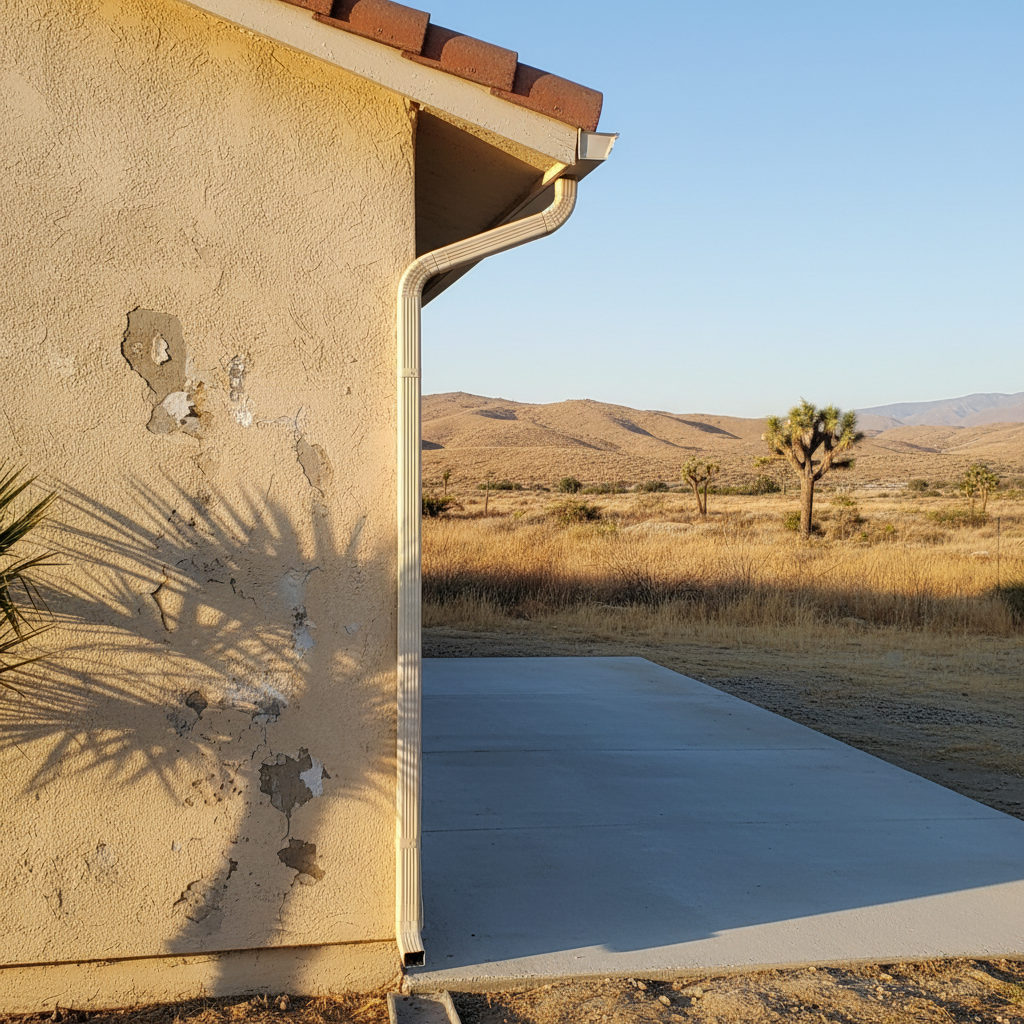
Alright, let's talk stucco. If you're thinking about putting stucco on your new build or re-stuccoing your existing place here in Bakersfield, you've probably heard a couple of terms thrown around: 'traditional stucco' and 'synthetic stucco.' They both look good, sure, but they're built totally different and they'll perform differently too, especially with our Central Valley heat and occasional winter rains. So, which one's the right call for your home? Let's get into it.
What We Mean by 'Traditional Stucco'
When I say traditional stucco, I'm talking about a cement-based product. It's usually a three-coat system: scratch coat, brown coat, and then the finish coat. Sometimes it's called hard-coat stucco. This is the stuff that's been around for literally hundreds of years. It's basically a mix of cement, sand, lime, and water, applied over a wire lath and building paper. It's tough, it's breathable, and it's what most of us grew up seeing on homes all over California.
And What About 'Synthetic Stucco' (EIFS)?
Synthetic stucco is a whole different animal. The official name is Exterior Insulation and Finish System, or EIFS. It's a multi-layered system that starts with a foam insulation board (usually expanded polystyrene, or EPS) attached to your wall sheathing. Over that foam, we apply a base coat with a fiberglass mesh embedded in it for strength, and then a final acrylic finish coat. The key difference here is that foam layer – it's an insulator, which traditional stucco isn't.
Cost: Upfront Investment
Let's hit the wallet first. Generally speaking, traditional stucco tends to be a bit more budget-friendly on the initial installation. It's less material-intensive in terms of specialized components, and the labor, while skilled, is a different kind of skill set. EIFS, with its insulation board and more specialized acrylic finishes, usually comes in at a higher price point upfront. You're paying for that extra insulation and the specific materials involved. For a typical home in, say, the Seven Oaks area, you might see a noticeable difference in the initial bid.
Durability and Impact Resistance
Here's where traditional stucco really shines in my book. It's hard. Like, really hard. You can hit it with a baseball, and it's probably going to be fine. It's incredibly impact resistant because it's a solid, dense cementitious material. EIFS, on the other hand, is softer. That foam board underneath can dent or puncture if it takes a hard hit. Think about a ladder leaning against the wall or a kid's bike falling into it. Those can leave a mark on EIFS where traditional stucco might just shrug it off.
Maintenance and Repairs
Both types need some looking after, but in different ways. Traditional stucco is pretty low maintenance. Keep it clean, fix cracks if they show up (which they can, because cement expands and contracts), and you're good. Repairs are usually straightforward; we can patch it up and match the texture and color pretty well. With EIFS, you need to be more careful about impacts. If the system gets punctured, water can get behind the foam, and that's a problem you want to avoid. Repairs can be a bit more involved to ensure the integrity of the system is restored and sealed properly. You've got to make sure that water barrier is always intact.
Appearance and Aesthetics
This is where personal preference comes in, but there are some differences. Traditional stucco gives you that classic, slightly textured, earthy look. You can get a huge range of colors and textures, from smooth to very coarse. EIFS also offers a wide array of colors and textures, often with a more uniform, sometimes smoother, appearance due to the acrylic finish. Because of the foam, EIFS can also be shaped into more elaborate architectural details like cornices or arches more easily than traditional stucco, which is a big plus for some designs. Both can look fantastic, it just depends on the exact aesthetic you're aiming for.
Moisture Management: A Big One for Bakersfield
This is crucial, especially with our occasional heavy downpours followed by intense heat. Traditional stucco is considered a 'reservoir cladding.' It can absorb some moisture and then release it as it dries. It's breathable. The key is that it needs a good drainage plane behind it – that building paper and weep screed are vital to make sure any water that gets behind the stucco can drain out. If installed correctly, it manages moisture very well.
EIFS is a 'barrier' system. It's designed to be watertight from the outside. If it's installed perfectly, with every seam and penetration sealed flawlessly, it works great. The problem arises if there's a breach – a crack, a poorly sealed window, or a damaged area. If water gets in, it can get trapped behind that foam insulation, leading to serious moisture issues, rot, and mold, because it can't easily dry out. This is why proper installation and meticulous sealing are absolutely non-negotiable with EIFS.
The Bottom Line for Bakersfield Homeowners
So, what's my recommendation? For most homeowners in Bakersfield, I lean towards traditional cement stucco. Here's why:
- Durability: It stands up better to everyday bumps and scrapes, which is important for long-term peace of mind.
- Moisture Management: Its breathability and inherent drainage capabilities make it more forgiving if there's ever a small breach. In our climate, where we get hot sun and then sudden rain, you want a system that can handle moisture without trapping it.
- Cost-Effectiveness: While both are investments, traditional stucco often offers a better balance of upfront cost and long-term performance for our local conditions.
Don't get me wrong, EIFS has its place, especially where maximum insulation is the absolute priority and the budget allows for meticulous installation and ongoing vigilance. But for the typical Bakersfield home, where you want a robust, classic, and relatively worry-free exterior, traditional stucco is usually the smarter bet.
No matter which way you go, the quality of the installation is everything. You need a contractor who understands the specific requirements of each system and doesn't cut corners. That's why folks trust Top Line Stucco Bakersfield. We've been doing this a long time, and we know what works here. Give us a call if you want to talk specifics about your project.